GIHO
Preference-first Accommodation Platform Design
Brand
GIHO
Role
UX Researcher & Lead Designer (Graduate Thesis Project)
Industry
Travel & Hospitality Tech
Summary
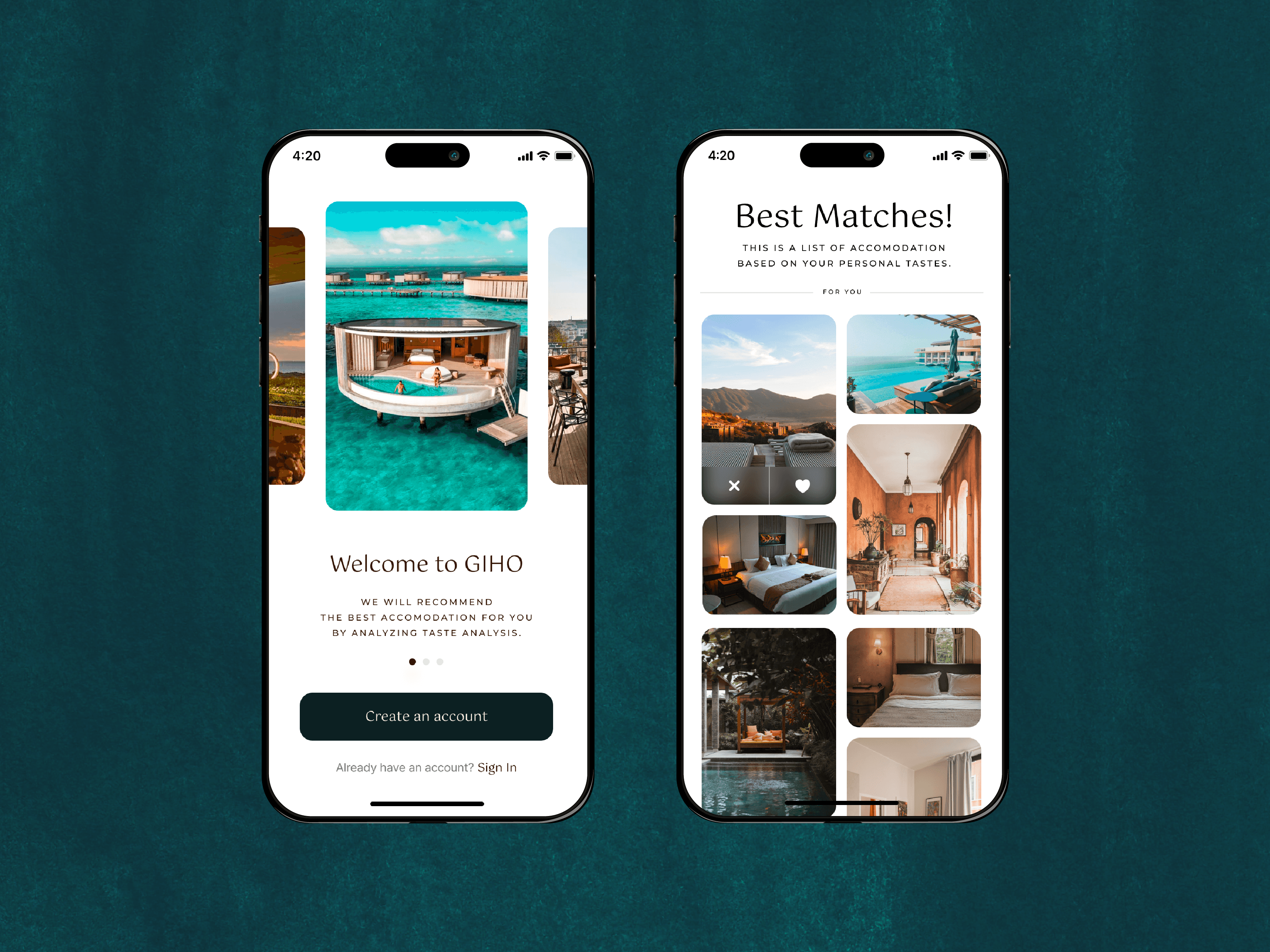
Existing booking platforms rely on price and location filters, ignoring the most important factor for modern travelers: personal taste. I designed GIHO, a preference-first accommodation platform that shifts from searching to curating, using behavioral data to match users with spaces that fit their aesthetic and lifestyle.
Context
Developed as part of my graduate thesis in Design Management at Hongik University, this project began with a question: why do booking platforms still rely on price and location filters, when personal taste matters just as much? The hospitality industry has moved toward an Experience Economy, where travelers seek emotionally meaningful stays. But OTAs haven't kept pace, still depending on logic-based filters that cause decision fatigue and ignore personal taste.
The Challenge
Build a platform that captures a user's unique taste profile and uses it to curate accommodations, replacing overwhelming filter systems with an intuitive, visually-driven discovery experience.

My Approach
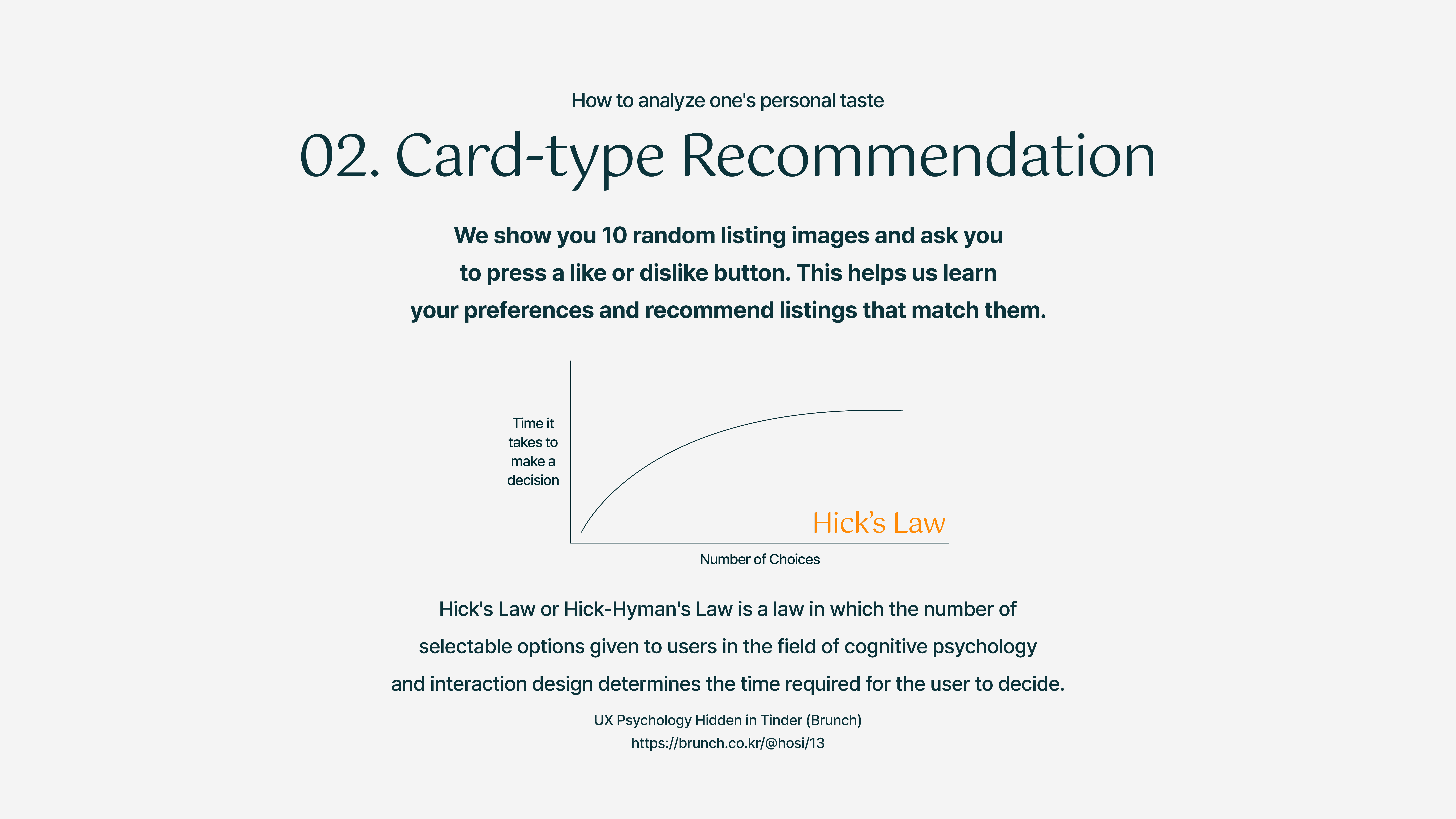
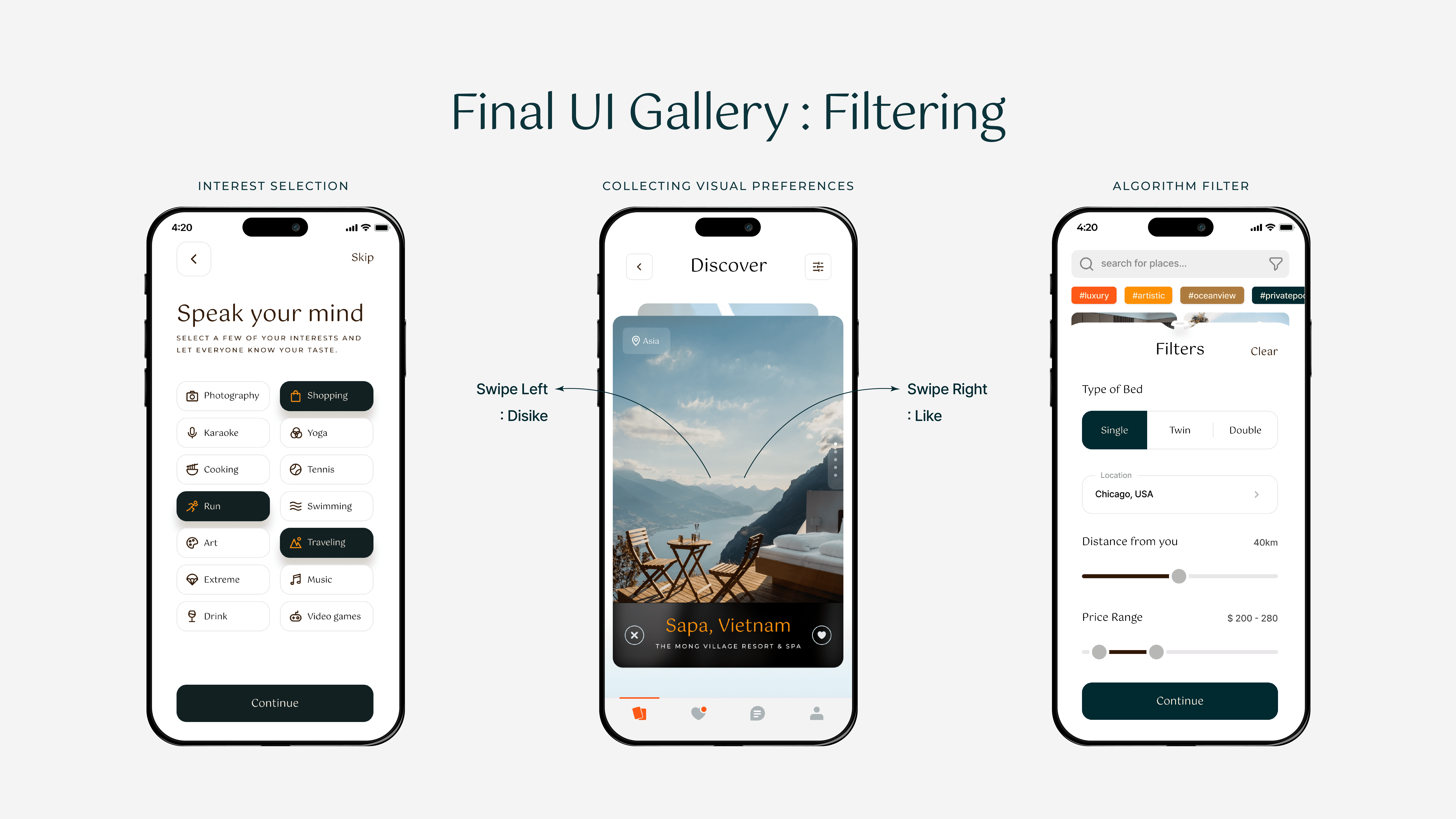
Research revealed that travelers don't just choose accommodations based on comfort or price. SNS shareability was a significant decision factor. People want to stay somewhere worth posting. This insight reframed the design problem from utility to aspiration. For the interaction model, I chose a swipe interface because it's the most instinctive and intuitive pattern available. It also directly applies Hick's Law — by presenting one option at a time, decision time drops dramatically compared to traditional filter-based browsing. Less choice per moment, better decisions overall.
Solution
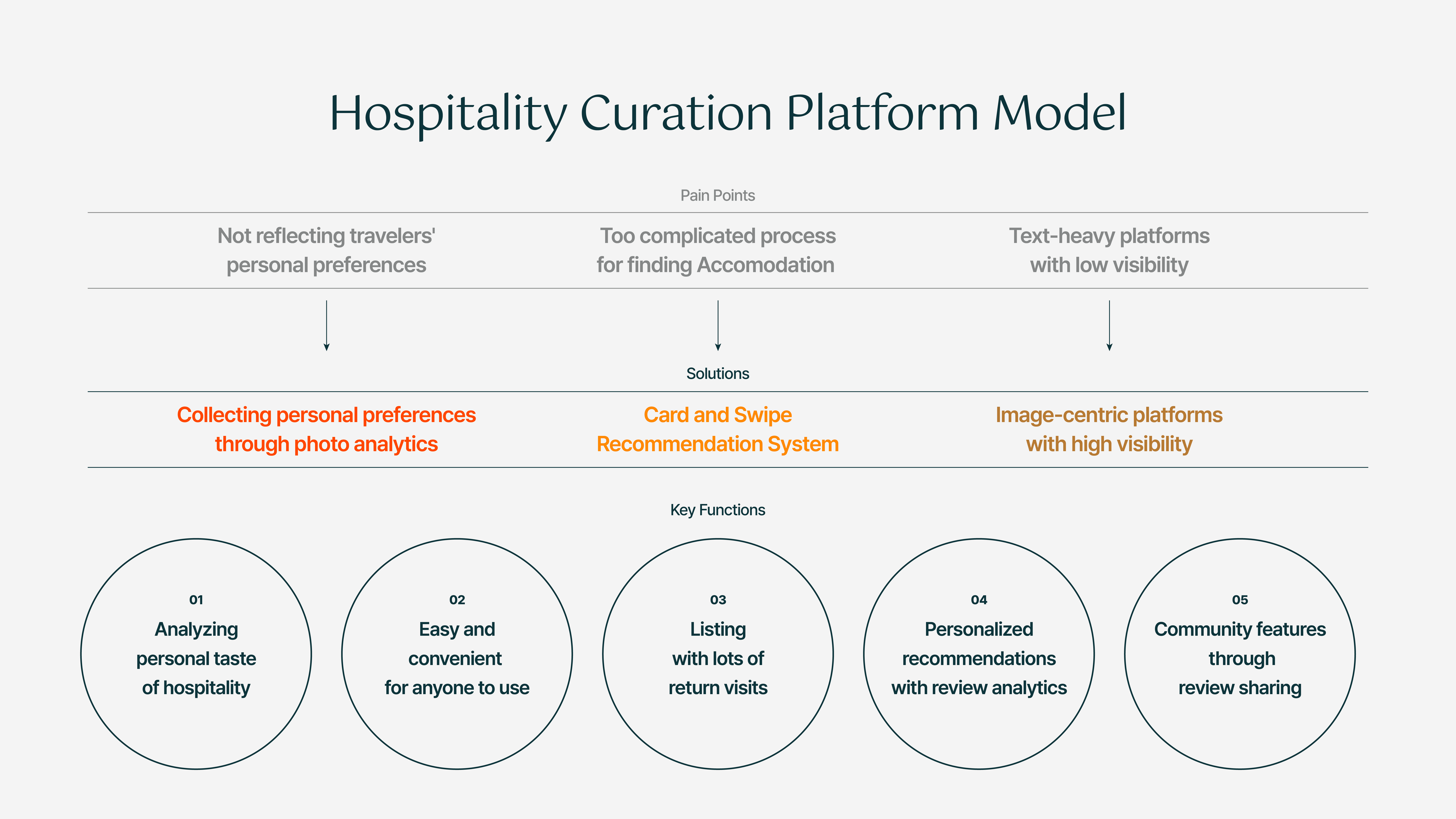
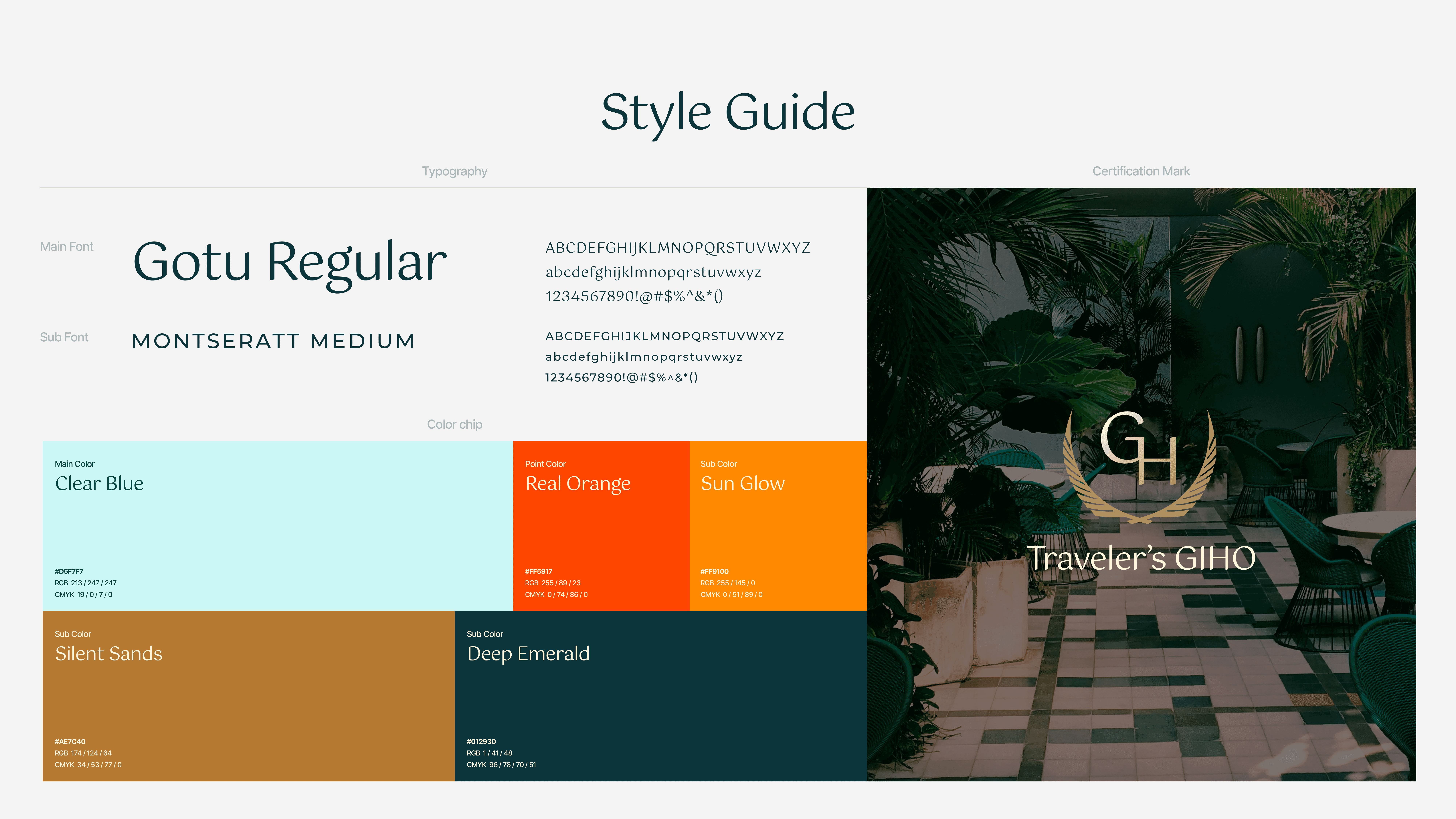
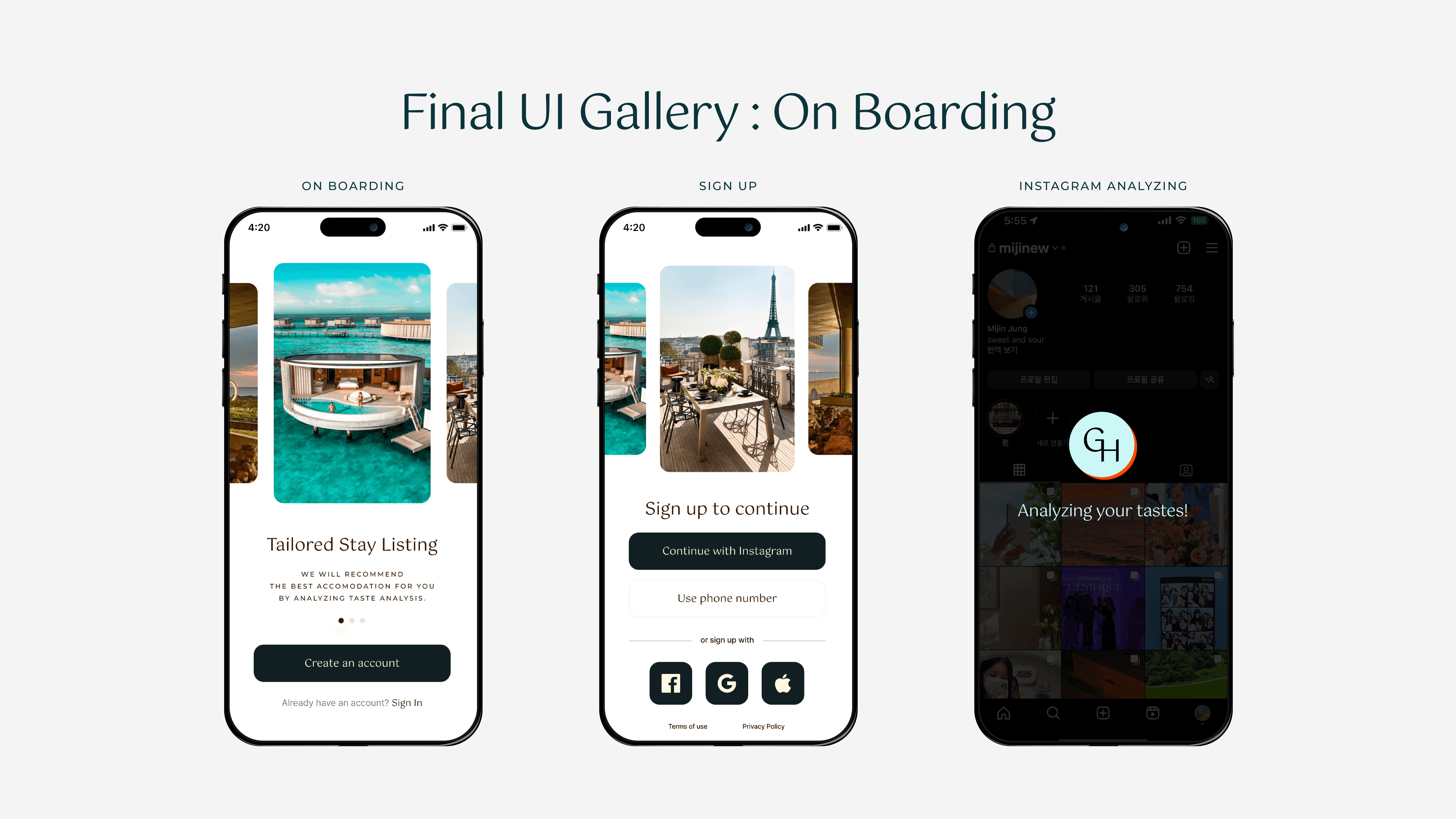
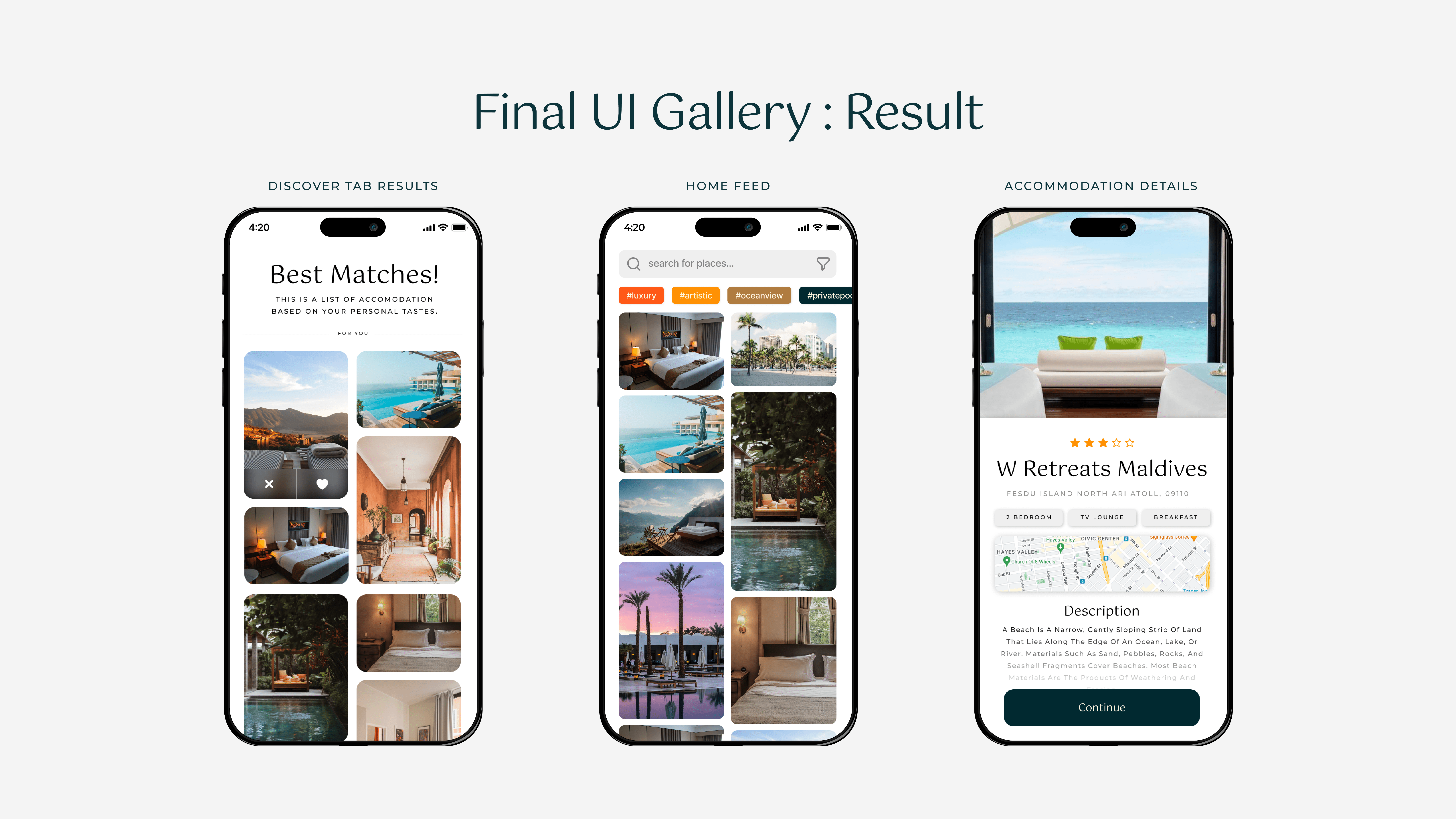
• Built PicTailor, a service that analyzes users' Instagram feeds to identify visual preferences and generate a personal Taste Profile, replacing lengthy surveys. • Designed a Tinder-style swipe interface to reduce decision fatigue, letting the system learn preferences in real time through intuitive interaction. • Established a visual-first UI system with a Rich Brownie and Clear Mint brand language, prioritizing image-centric layouts over text-heavy lists.

Impact
• Validated the swipe interaction through informal usability sessions with 10 participants — all understood and used it without instruction. • End-to-end ownership from research thesis to high-fidelity UI, validated through direct user testing rather than assumptions alone.